

ForceBeyond Logo
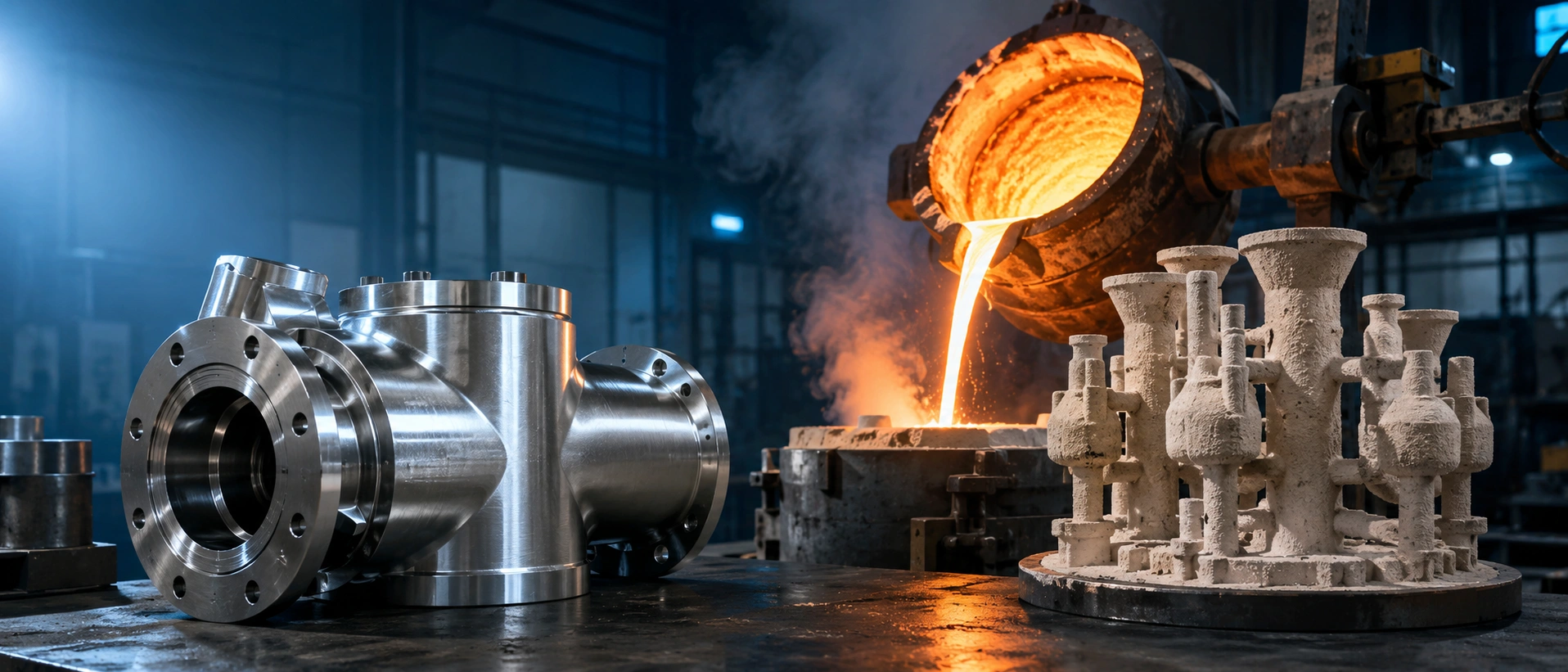
Duplex and super duplex stainless steel casting components and foundry processing

Duplex & Super Duplex Stainless Steel Casting Services

Custom Duplex and Super Duplex Stainless Steel Casting

ForceBeyond provides custom duplex stainless steel casting services and super duplex casting for corrosion-resistant, high-strength metal components. Duplex alloys combine ferritic and austenitic phases, offering higher strength and improved resistance to chloride stress-corrosion cracking compared with many conventional austenitic stainless steels.

Programs may include ASTM A890 and customer-specified cast duplex grades for valves, pumps, manifolds, impellers, pressure-containing components, and marine hardware. ForceBeyond coordinates investment casting, duplex stainless steel machining, solution treatment, finishing, inspection, and documentation through an integrated manufacturing network.

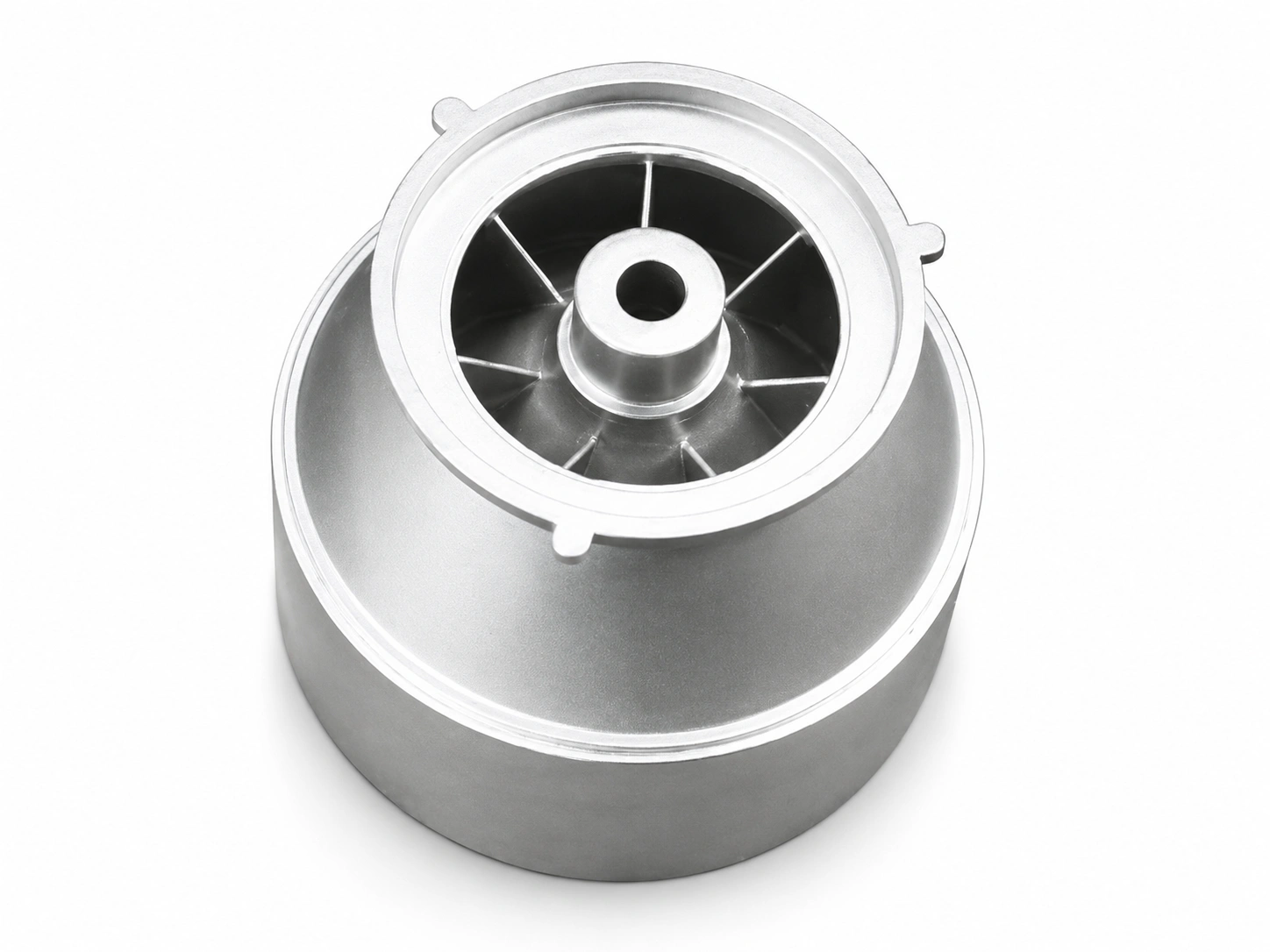
Duplex stainless steel cast pump housing with machined flanges and mounting features

When to Choose Duplex Stainless Steel Casting

Duplex and super duplex stainless steel casting is often selected when a component requires a combination of mechanical strength, resistance to chloride stress-corrosion cracking, and improved pitting or crevice-corrosion performance.

  • Chloride-bearing service: seawater, brine, desalination, offshore, and selected chemical-processing environments.
  • High-strength designs: higher yield strength may support reduced section thickness where permitted by code and design analysis.
  • Complex flow components: pump housings, impellers, valve bodies, manifolds, and pressure-containing geometries.
  • Near-net-shape efficiency: investment casting can reduce machining on strong, work-hardening duplex alloys.
  • Specification-driven projects: applications requiring ASTM, UNS, NACE, ISO, customer, or industry-specific material controls.

Duplex and Super Duplex Casting Grades

Grade designations, chemical composition, ferrite balance, mechanical properties, and corrosion performance should be confirmed against the applicable cast-alloy specification. The information below is general guidance rather than a substitute for the governing material standard.

Material Category Representative Cast Grades Typical Characteristics and Applications
Standard Duplex Stainless Steel ASTM A890 Grade 4A and related customer-specified cast duplex grades Good strength and resistance to chloride stress-corrosion cracking for pumps, valves, manifolds, desalination equipment, and chemical-processing components.
Super Duplex Stainless Steel ASTM A890 Grade 5A and related high-alloy cast grades Higher chromium, molybdenum, and nitrogen content for more demanding chloride, marine, subsea, and offshore environments.
High-Alloy Super Duplex Grades Grade 6A and project-specific proprietary or customer-specified grades Selected for severe corrosion environments, acid service, mining, slurry handling, desalination, and specialized flow-control equipment.
Cast Duplex Pump and Valve Grades CD4MCuN and other specification-controlled cast duplex alloys Used in pumps, impellers, valve bodies, and erosion-corrosion service where mechanical strength and corrosion resistance are both required.

Metallurgical Control for Duplex Stainless Steel Castings

Duplex casting performance depends on more than chemical composition. Melting, pouring, solidification, solution treatment, quenching, welding, and subsequent thermal exposure can affect phase balance, toughness, and corrosion resistance.

  • Solution treatment and quenching: thermal cycles should dissolve harmful intermetallic phases and restore the required microstructure.
  • Ferrite control: ferrite content should be evaluated according to the governing specification and service requirement.
  • Intermetallic-phase avoidance: uncontrolled thermal exposure may promote sigma or other detrimental phases.
  • Corrosion testing: ASTM G48 or other project-specific tests may be required for critical chloride service.
  • Material verification: chemistry, mechanical testing, ferrite evaluation, and heat-treatment records should match purchase-order requirements.

Duplex Stainless Steel Casting Design Guidelines

  • Wall transitions: avoid abrupt section changes that can create hot spots, shrinkage, and heat-treatment variation.
  • Machining allowance: add controlled stock to sealing surfaces, bores, datums, and pressure-critical interfaces.
  • Corrosion-sensitive geometry: identify crevices, stagnant zones, gasket interfaces, and dead legs during design review.
  • Pressure-containing features: define NDT, hydrostatic testing, leak testing, and documentation requirements before tooling release.
  • Welding and repair: establish whether weld repair is permitted and which qualification, heat-treatment, and inspection rules apply.

Duplex Casting, Machining and Secondary Operations

Duplex castings often require coordinated machining, heat treatment, surface conditioning, inspection, and testing before delivery.

  • Duplex stainless steel machining: rigid setups, controlled cutting parameters, and suitable tooling for bores, sealing faces, threads, flanges, and complex profiles.
  • Heat treatment: solution treatment and rapid quenching according to alloy and specification.
  • Surface finishing: blasting, pickling, passivation, polishing, and project-specific protective treatments.
  • Inspection and testing: dimensional inspection, penetrant testing, radiography, ultrasonic testing, ferrite measurement, corrosion testing, and pressure testing as required.
  • Assembly and kitting: seals, inserts, hardware, sub-assembly, labeling, and protective packaging.

Duplex and Super Duplex Casting Applications

  • Oil and gas: valve bodies, pump components, manifolds, subsea hardware, and sour-service components where permitted by the governing specification.
  • Fluid and flow control: impellers, pump housings, valve bodies, fittings, strainers, and pressure-containing flow components.
  • Energy and power generation: cooling-water components, pumps, valves, and corrosion-resistant hardware.
  • Desalination and marine: high-pressure pumps, seawater intake components, manifolds, and marine hardware.
  • Chemical processing: agitators, pump parts, valve components, acid-transfer equipment, and corrosion-resistant fittings.
  • Mining and slurry handling: pump components, impellers, housings, and erosion-corrosion-resistant hardware.

Frequently Asked Questions: Duplex Stainless Steel Casting

What is the difference between duplex and super duplex stainless steel casting?

Duplex stainless steels combine austenitic and ferritic phases to provide higher strength and better resistance to chloride stress-corrosion cracking than many conventional austenitic grades. Super duplex grades contain higher levels of chromium, molybdenum, and nitrogen and typically provide higher pitting resistance. Final selection should be based on the governing cast-alloy specification, service temperature, chloride level, pressure, welding requirements, and corrosion testing.

Why choose duplex stainless steel casting instead of 316L?

Duplex grades generally provide higher yield strength and improved resistance to chloride stress-corrosion cracking and localized corrosion compared with 316L. These advantages can support thinner sections or longer service life in suitable designs. Duplex is not automatically the best choice for every application, because fabrication, heat treatment, temperature limits, cost, and specification requirements must also be considered.

Why is investment casting useful for duplex stainless steel parts?

Duplex and super duplex alloys can be demanding to machine because of their strength and work-hardening behavior. Investment casting can form complex near-net shapes, fluid passages, and detailed features before machining, reducing stock removal on suitable components. Machining allowances, heat treatment, ferrite balance, and inspection should be planned together.

What information is needed for a duplex stainless steel casting quote?

Provide a 2D drawing and, when available, a 3D CAD model, along with the required ASTM, UNS, NACE, ISO, or customer material specification, quantity, critical dimensions, pressure rating, corrosion environment, heat treatment, ferrite requirements, machining, NDT, corrosion testing, documentation, and delivery requirements.

Request a Duplex Stainless Steel Casting Quote

Send your drawing, CAD model, alloy specification, quantity, corrosion environment, heat-treatment, machining, inspection, testing, and delivery requirements for an engineering review.

Technical References
Related Duplex Casting, Machining, Quality and Materials Resources