ForceBeyond Logo
Titanium aerospace jet engine undergoing a high-performance ground test with active exhaust

Cold Forging: High-Volume Precision & Strain-Hardened Strength

Cold Forging: High-Volume Precision & Strain-Hardened Strength

ForceBeyond is a premier manufacturer of high-precision cold forged components. By shaping metal at room temperature—well below its recrystallization point—cold forging uniquely alters the metal's internal structure through strain hardening. This process yields components with exceptional tensile strength, brilliant surface finishes, and incredibly tight dimensional tolerances.

Engineered for high-volume, high-speed production, our cold forging capabilities within our comprehensive custom forging solutions provide a highly economical solution for producing near-net and true net-shape parts. From intricate automotive fasteners to high-conductivity copper electronic components, ForceBeyond delivers fully finished, assembly-ready parts that frequently require zero secondary machining.

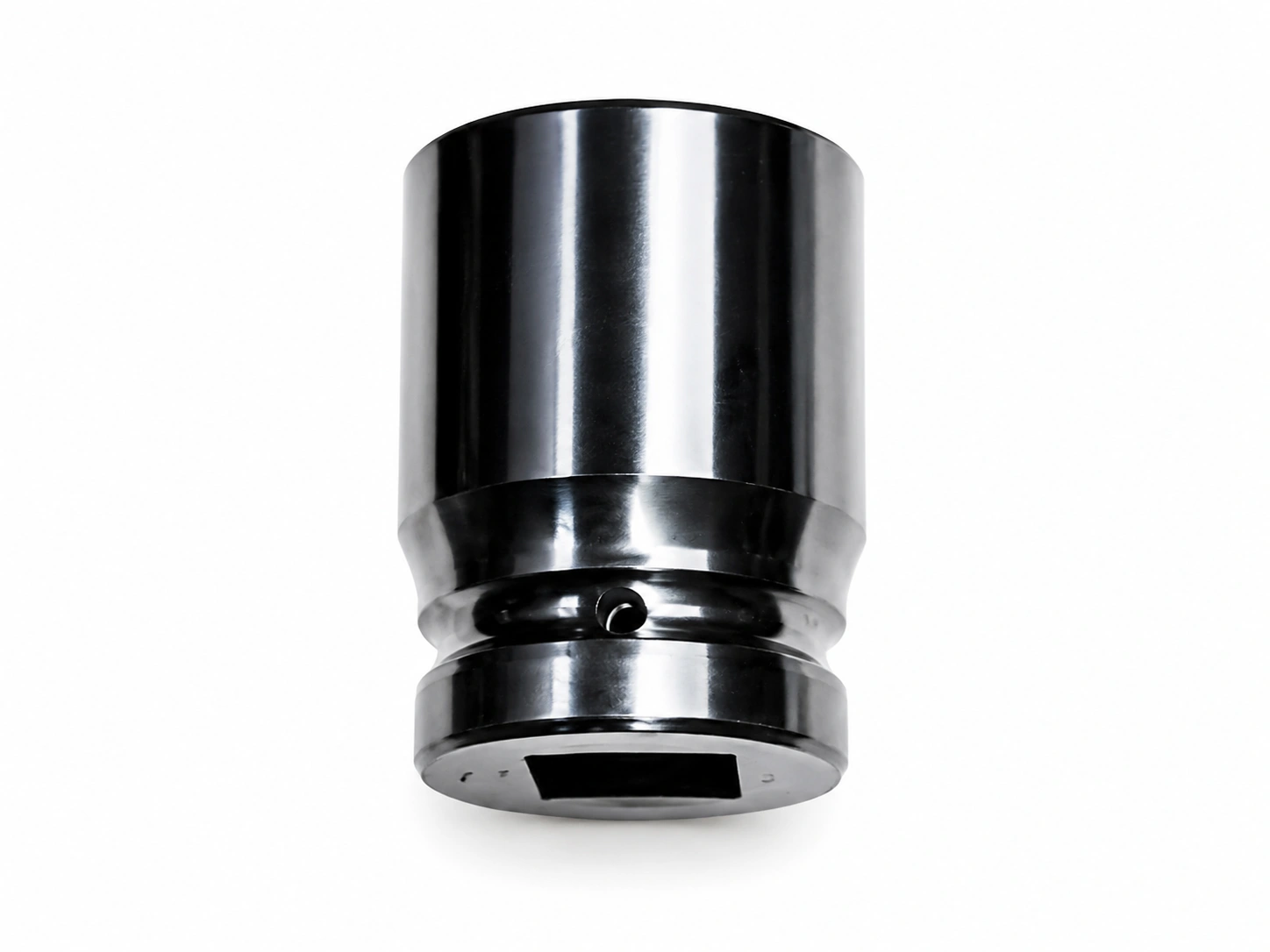
Precision cold-forged polished steel socket component with a cylindrical body and square drive opening on a white background.

Technical Capabilities: Cold Forging Materials

Because the metal is not softened by heat, cold forging requires highly ductile materials that can withstand extreme compressive forces without fracturing. ForceBeyond specializes in cold-forming the following alloy groups:

Material Category Common Alloys Key Cold Forging Characteristics
Carbon & Low-Alloy Steels 1008, 1010, 1018, 1035 Highly ductile. Excellent for high-strength fasteners, pins, and small automotive shafts.
Aluminum Alloys 1100, 6061, 7075 Exceptional malleability. Ideal for lightweight structural brackets and aerospace rivets.
Copper & Brass C11000, C26000 Supreme conductivity and cold-flow properties. Widely used for electronic terminals and heat sinks.
Stainless Steel 302, 304, 410, 430 Requires higher press tonnages but yields highly corrosion-resistant, sterile medical and marine hardware.

Why Partner with ForceBeyond for Cold Forging?

When part volumes are high and designs allow for room-temperature deformation, cold forging is often the most mechanically superior and cost-effective manufacturing method available.

  • Strain Hardening (Work Hardening): Unlike hot closed die forging or liquid die casting, deforming metal at room temperature permanently compresses and elongates the grain structure. This drastically increases the metal's yield strength and hardness, allowing you to use a lower-cost, lower-carbon steel while achieving high-strength performance.
  • Net-Shape Accuracy: Cold forging achieves the tightest dimensional tolerances of any bulk deformation process. Many parts come off the press at their exact final dimensions (net shape), completely eliminating the cost and lead time of secondary CNC machining.
  • Superior Surface Finish: Because the metal is not exposed to extreme heat or atmospheric oxidation, there is zero scale formation. Parts emerge with a smooth, bright surface finish that is immediately ready for surface treatment or assembly.
  • Maximum Material Efficiency: Cold forming operations simply shift metal volume into shape rather than cutting chips away. This produces near-zero raw material scrap, drastically reducing total per-part costs for high-volume production runs.

The Cold Forging Process: Extrusion & Upsetting

Cold forging typically utilizes a progression of closed dies in high-speed mechanical or hydraulic presses. ForceBeyond leverages several specific cold forming techniques:

  • Forward Extrusion: Forcing the metal through a reduced die orifice to decrease its cross-sectional diameter and increase its overall length (ideal for stepped shafts and pins).
  • Backward Extrusion: Forcing metal to flow backward around a descending punch to form hollow, cup-shaped components or deep cylindrical cavities.
  • Upsetting (Heading): Compressing the end of a metal rod or wire stock to increase its cross-sectional area, which serves as the primary method for manufacturing heads on bolts, screws, and custom automotive fasteners.

Tier-1.5 Integration: Complete Component Finishing

While cold forging frequently eliminates the need for heavy metal removal, ForceBeyond operates on a Tier-1.5 model to ensure your parts are 100% assembly-ready when delivered.

  • Thread Rolling: Rather than cutting thread profiles (which interrupt grain flow and reduce fatigue life), we roll threads onto cold-forged blanks, further strain-hardening the thread root for maximum shear and stripping resistance.
  • Precision Micro-Machining: For complex geometric features (such as lateral cross-holes, internal snap-ring grooves, or extreme tolerances) that cannot be directly pressed, our high-speed CNC machining centers provide final precision touches.
  • Plating & Surface Coating: Zinc plating, electro-nickel plating, chromate conversion, and anodizing to complement the smooth raw forged surface with superior corrosion protection and aesthetics.

Certified Cold Forging Applications

ForceBeyond’s high-speed cold heading and multi-station forging presses supply millions of high-strength components across core global industries:

  • Automotive & Transportation: Custom structural bolts, seatbelt mechanism pins, steering column shafts, and spark plug shells. (For larger structural drivetrain components, explore our heavy-duty open die forging capabilities).
  • Consumer Electronics: Custom heat sinks, highly conductive copper power terminals, and micro-precision casing screws.
  • Fluid & Air Control: High-pressure hose fittings, valve stems, and pneumatic quick-connect couplings.
  • Aerospace & Defense: High-tensile structural fasteners and specialized rivets. (For extreme temperature aerospace parts requiring exotic alloys, evaluate our superalloy forging services or titanium investment casting).

Frequently Asked Questions: Cold Forging

Can any metal be cold forged?

No. Because the metal is not heated, it must possess high natural ductility. Low-to-medium carbon steels, aluminum, copper, and brass are excellent candidates. High-carbon steels, titanium, and superalloys (like Inconel) are too hard and brittle at room temperature and must be hot forged.

Are there size limitations to cold forging?

Yes. Because cold metal resists deformation, it requires massive press tonnage to move. Therefore, cold forging is typically restricted to smaller parts (usually under 25 lbs, and often much smaller, like fasteners and pins). For massive structural components, hot open die or closed die forging is required.

How does cold forging reduce material costs?

If you CNC machine a bolt from a solid bar of steel, you turn a large percentage of that bar into scrap chips. Cold forging takes a wire or rod of the exact volume needed and simply reshapes it into the bolt. You pay only for the material in the final part, with virtually zero waste.

Request Quote For Cold Forging

Sources
Our Internal Resources for Die Casting, Investment casting, Forging and Sand Casting