ForceBeyond provides custom single crystal (SX) casting manufacturing services through its network for specified high-temperature superalloy components. An SX process controls directional growth so one selected crystal continues through the required casting region, avoiding conventional high-angle grain boundaries there. We support turbine programs with agreed crystal-orientation inspection, heat treatment and precision machining as the project requires.
Our Tier 1.5 model gives customers one U.S.-based engineering and commercial contact to coordinate crystal-controlled casting, inspection and applicable downstream work across the USA, South Korea and Taiwan manufacturing network. Send the exact alloy, crystal criteria and model for a casting-only or finished-component quotation.
Tier 1.5 Integration: Single Crystal Casting to Precision Manufacturing
SX components need a continuous record from selected-crystal growth through orientation inspection and final machining. ForceBeyond's Tier 1.5 supply model coordinates those stages, specified heat treatment and quality documentation under one commercial scope. Co-owned manufacturing resources support direct oversight, and our wider USA, South Korea and Taiwan network supports production coordination and continuity.
Our U.S.-based team aligns the casting and machining plans with the approved orientation and datum requirements, then manages technical questions across the selected resources. The scope can include casting-only delivery or a finished airfoil with downstream operations. This matters when a machining or thermal step could affect a crystal-acceptance decision; the sequence and release evidence are defined before manufacture.
Single Crystal Casting Manufacturing Capabilities
ForceBeyond supports custom SX investment casting with controlled directional growth and a grain-selector or seeded-growth route as required by the approved process. The manufacturing package can cover tooling and ceramic molds, specified cores, orientation and grain inspection, heat treatment, soundness checks, precision CNC machining and final component delivery.
The drawing establishes primary and any secondary orientation limits, permitted crystal defects, critical dimensions and release records. We define whether the quote covers a casting blank or further processed component, and coordinate the relevant specialists accordingly.
How a selected crystal grows
A controlled thermal gradient promotes directional growth from the starter region. A grain selector can restrict growth until one grain continues into the casting; a specified seed can instead establish a desired orientation. The route must control the solidification front and protect the intended crystal from stray grains or other defects. Crystal orientation relative to the part geometry is an inspection subject, not an assumption from the process name.
Selector and seed routes answer different orientation needs
A geometric selector narrows the path available to competing grains. A seed is a crystal of known orientation from which the new casting grows. The NASA orientation and casting study discusses both approaches and why crystal direction relative to blade geometry affects analysis. The required primary and secondary orientations, if controlled, belong in the design and process documents.
Single crystal casting process sequence
Define the exact alloy, orientation requirements, geometry and acceptance criteria.
Prepare the pattern, ceramic mold, cores and grain-selection or seeding arrangement.
Prepare and pour the melt under the specified conditions.
Control directional solidification so the intended crystal grows through the required region.
Remove the shell and complete the approved heat-treatment route.
Inspect orientation, unwanted grains, soundness and dimensions; complete finishing and release records.
Melting, directional solidification, grain selection or seeding, thermal processing and inspection are separate controls. Vacuum induction melting may be part of melt preparation where specified, but VIM alone does not create an SX structure.
Single crystal superalloys are grade-specific
CMSX-4 is an example of a nickel-base single-crystal alloy used in turbine airfoil discussions. Other SX alloys and derivatives have different chemistry and processing requirements. A shared crystal category does not make grades interchangeable; the drawing and governing specification must name the exact material and condition.
Engineering benefits and constraints
Removing conventional high-angle grain boundaries can address a grain-boundary contribution to high-temperature creep and thermal fatigue in some designs. The response is direction-dependent and also depends on alloy, cooling, coating, section geometry and service cycle. Orientation errors, stray grains, casting defects and changes during thermal processing can defeat the intended structure. No structure alone establishes a component life or approval.
Why processing after casting can change the accepted structure
Heat treatment and surface finishing are part of the material route. Local deformation from handling, machining or surface preparation can become relevant if subsequent thermal exposure promotes recrystallized grains. NASA's single-crystal defect study documents this inspection concern for turbine airfoils. The approved sequence therefore needs to identify when grain examination occurs and whether a later operation requires another check.
Applications in high-temperature turbine hardware
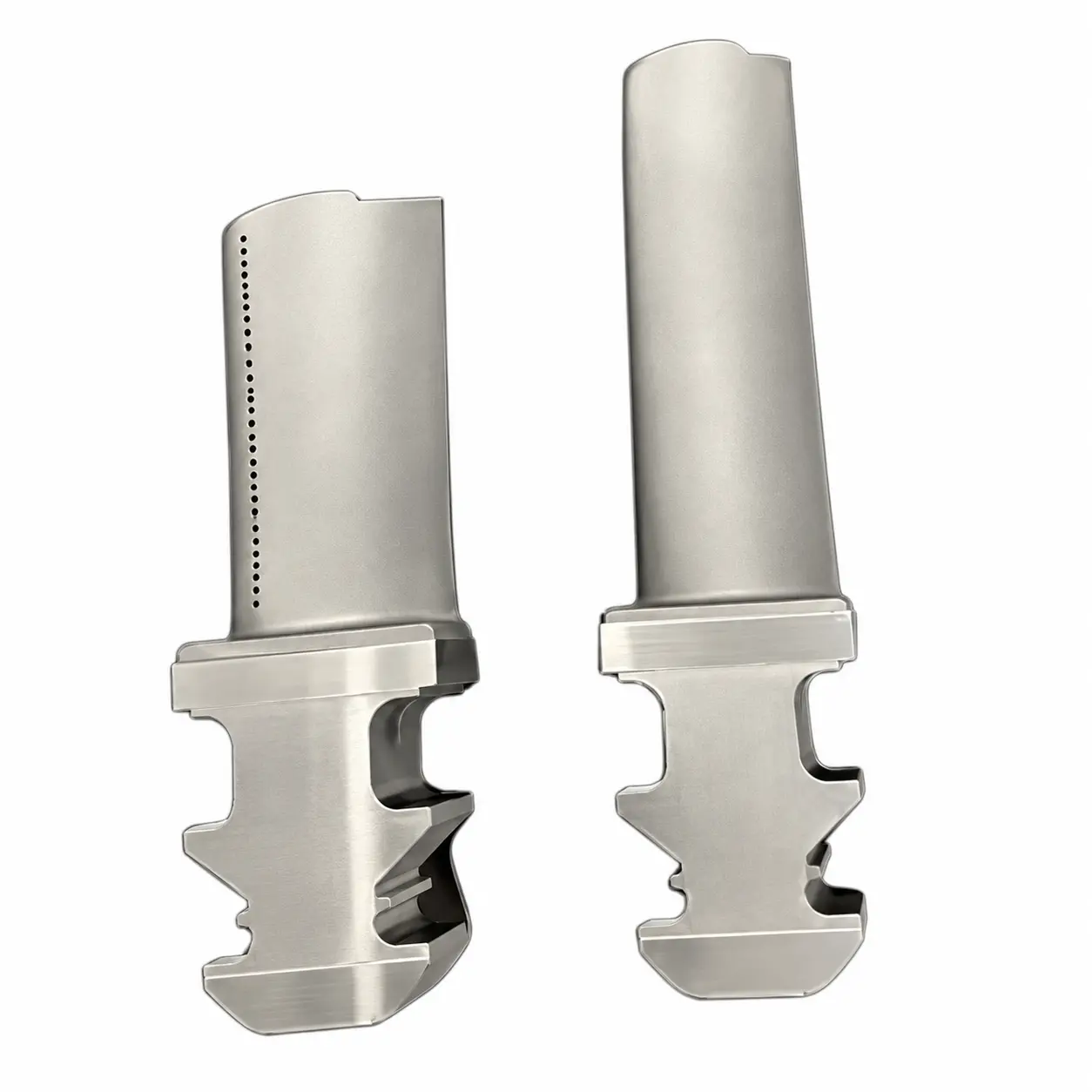
ForceBeyond supports SX casting programs for selected high-temperature turbine airfoils when the design and material specification require crystal control. The component page below addresses blade-specific chemistry, cooling geometry, orientation and finished-part scope.
CMSX-4 single-crystal turbine blade
Review grade identification, orientation requirements, casting inspection and delivery state for a specific blade enquiry.
Directionally solidified casting typically retains several columnar grains and their longitudinal boundaries. An SX route adds grain selection or seeding to continue one crystal. For a fuller comparison that also covers conventional equiaxed castings, see the three-structure technical guide.
Quality and inspection considerations
Inspection should address primary and any specified secondary orientation, stray grains or recrystallized regions, internal and surface soundness, cooling passages and final dimensions as applicable. Methods and acceptance limits come from the approved program documents. The quotation must identify whether the supply ends at the casting or includes heat treatment, machining, coating and final release.
Different checks answer different acceptance questions
Requirement
What the plan must establish
Crystal orientation
Which lattice directions and part datums are measured, and their permitted limits.
Unwanted grains
Where stray, low-angle or recrystallized regions are examined and what is allowed.
Casting soundness
Which surface and internal discontinuities require examination.
Geometry and passages
Which dimensions, wall locations and cooling features require verification.
What to send for an SX casting quotation
Provide the drawing and model revision; exact alloy and derivative; required crystal structure and primary or secondary orientation limits; grain and soundness criteria; heat-treatment and coating requirements; inspection methods; quantity; and the final delivery state. A casting-only enquiry differs from a finished airfoil package because downstream processors and acceptance records must be assigned explicitly. The CMSX-4 blade page addresses those decisions for a named alloy and blade application.
Frequently Asked Questions
Does ForceBeyond offer custom single crystal casting services?
Yes. ForceBeyond supports custom SX superalloy casting programs through its manufacturing network, with U.S.-based engineering coordination. Send the exact alloy, drawing, orientation criteria and delivery scope for a quotation.
Does single crystal casting require directional solidification?
Yes. The solidification front is controlled, then a grain selector or seed establishes the intended single crystal growth. Orientation and unwanted grains still require inspection.
Does a single crystal eliminate all casting inspection?
No. Orientation, stray grains, soundness, dimensions and any cooling features require separate checks under the governing specification.
What is the difference between a grain selector and a seed?
A selector restricts the growth path until one grain continues; a specified seed introduces a crystal with a known orientation. The approved route determines which method and orientation controls are required.
How should primary and secondary crystal orientation be specified?
The design documents should relate the required lattice directions to part datums and state applicable tolerances and measurement methods. A generic SX label does not establish those limits.
Can another SX alloy replace CMSX-4 without qualification?
No. Single-crystal alloys and derivatives can differ in chemistry, heat treatment and acceptance criteria. Any substitution needs the responsible design authority and governing specification.
Request a Custom Single Crystal Casting Quote
Send the exact alloy variant, drawing, crystal-orientation and defect criteria, inspection plan, quantity and required delivery condition.