ForceBeyond provides directionally solidified (DS) casting services for custom nickel-based superalloy components through its manufacturing network. DS casting controls the solidification front so columnar grains grow predominantly along a specified direction. We can coordinate the casting route with required heat treatment, inspection and CNC machining for a casting blank or finished component. Send your drawing and material specification for a custom quotation.
Our Tier 1.5 model gives customers U.S.-based engineering and commercial contact for technical reviews, production handoffs and quality oversight across manufacturing resources in the USA, South Korea and Taiwan. The exact DS production route and downstream operations are selected for the component and approved specification.
The Tier 1.5 Advantage: From Directional Solidification to Finished Components
ForceBeyond's Tier 1.5 model brings specialized DS casting, downstream machining and quality oversight into one supply program. Co-owned manufacturing resources support direct production oversight, while the broader USA, South Korea and Taiwan network provides coordinated capacity and supply continuity. Our U.S.-based engineering and commercial team reviews drawings, manages technical communication and serves as one contact for the agreed scope.
For a machined DS component, we coordinate handoffs between grain-controlled casting, heat treatment, inspection and CNC machining, with finishing where specified. This allows procurement teams to manage one documented casting-to-component package instead of separate supplier interfaces. For blade geometry and cooling-specific decisions, see our DS turbine blade manufacturing service.
ForceBeyond supplies custom DS investment castings through a defined manufacturing and inspection program. Scope can include tooling and patterns, ceramic-shell preparation, cores for required cavities, controlled columnar-grain solidification, specified heat treatment, NDT, precision CNC machining and finishing. Alloy chemistry, grain condition and acceptance records follow the customer's approved documents.
We quote casting-only and finished-component packages separately. The review establishes which network resources perform each approved operation and where dimensional and structure checks occur, so downstream work does not obscure casting acceptance.
How directional solidification works
Controlled heat extraction establishes a thermal gradient through the mold. As the solidification front advances, favorably oriented grains continue to grow into the part. A Bridgman-type route moves the mold relative to a heated zone and cooler region to control that front; the actual equipment and process parameters depend on the specified route. DS castings retain boundaries between columnar grains, usually oriented primarily along the growth direction.
Growth direction is a component requirement
The intended columnar axis must be related to part datums and principal loading. At platforms, changes in section and core-defined cavities, the advancing front encounters different local heat-flow conditions. The approved process and acceptance plan must address how those areas are evaluated; a straight columnar region in one section does not prove the entire casting meets the grain requirement. NASA's solidification-process discussion describes the importance of microstructure control in turbine alloys.
DS casting manufacturing sequence
Confirm the alloy variant, drawing, required structure and inspection plan.
Prepare the pattern, cores where needed, and ceramic shell.
Prepare and pour the melt under the specified atmosphere; vacuum melting or pouring may apply.
Control heat extraction and the solidification front to develop the required columnar structure.
Remove the shell and complete approved thermal processing.
Finish critical geometry and inspect the structure, soundness and dimensions.
Vacuum induction melting (VIM) addresses melt preparation and cleanliness where specified. It does not by itself establish directional grain growth; solidification control is a separate part of the route.
Alloy designation and structure must be specified together
Nickel-based superalloy examples discussed in DS literature include Mar-M 247 and particular René 80 or CM 247 LC variants. A family name alone does not establish a DS grade or permit substitution between variants. The purchase specification must identify the exact chemistry, product form, required structure, heat treatment and acceptance criteria.
Engineering considerations for columnar castings
Columnar growth can reduce grain boundaries transverse to a chosen load direction, but properties remain direction-dependent. Creep, thermal cycling, section changes, cooling features and environmental exposure must be evaluated for the actual design. Grain alignment, stray or misoriented grains, porosity and surface condition are separate acceptance subjects; DS is not a universal performance rating.
A published NASA study of a DS nickel-base alloy found that longitudinal boundaries and neighboring-grain misorientation affected deformation behavior. That result supports treating grain alignment and boundary condition as engineering inputs; it does not supply a universal life or temperature allowance for a different alloy or component.
Thermal processing, finishing and delivery scope
The casting route does not end when the shell is removed. The approved heat-treatment sequence establishes the specified material condition, while machining and coating can change critical interfaces and the state in which dimensions are measured. If cooling passages or thin walls are present, core location and passage continuity need their own acceptance plan. Procurement should separate cast-only, heat-treated, finish-machined and coated delivery rather than assume those operations are included in a DS designation.
Applications in high-temperature turbine components
ForceBeyond supplies custom DS castings for selected hot-section airfoils and other components whose approved design calls for a controlled columnar structure. Application and production scope remain drawing- and program-specific.
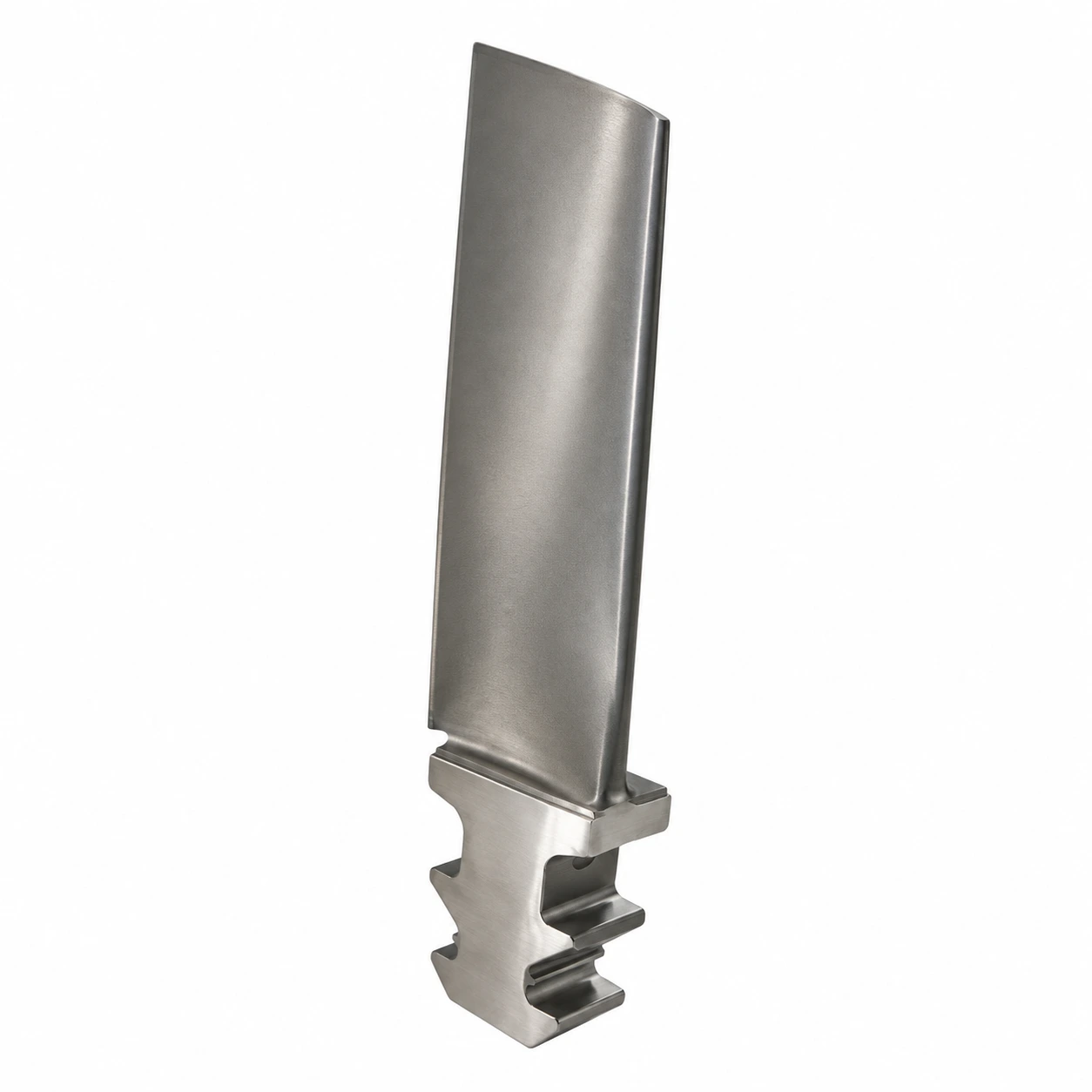
Directionally solidified turbine blades
Blade cooling passages, root attachment, coating interfaces and grain direction create a component-specific manufacturing and inspection package.
DS castings retain multiple aligned grains. A successful single crystal casting uses grain selection or seeding to continue one crystal through the specified region. The equiaxed, DS and SX comparison guide explains the broader differences without replacing the drawing's requirements.
Inspection and quality planning
The plan should define how grain orientation and structure, casting soundness, dimensional relationships and required NDT are verified. Acceptance criteria depend on the alloy, component, process specification and customer requirements. A quotation should distinguish a casting-only supply from heat treated, machined or coated delivery.
Structure examination answers whether the required columnar grains developed. Soundness methods address internal or surface discontinuities; dimensional measurements address the drawing. These checks are complementary, and the approved documents must state when each is performed and what records accompany the part.
What to include in a DS casting RFQ
Information needed to review a directional-solidification route
Input
Engineering decision it supports
Drawing and model revision
Sets casting geometry, datums, core features and critical sections.
Exact alloy and required structure
Distinguishes the specified DS variant from other forms of the same alloy family.
Growth direction and limits
Connects the columnar axis and acceptable grain condition to part geometry.
Thermal and inspection requirements
Defines heat treatment, soundness, structure, NDT and release evidence.
Quantity and delivery state
Separates development, casting-only and finished-component scopes.
For an airfoil-specific enquiry, the DS turbine blade casting page adds cooling, root, platform and coating considerations.
Frequently Asked Questions
Does ForceBeyond provide custom directionally solidified casting services?
Yes. ForceBeyond supplies custom DS superalloy castings through its manufacturing network, with U.S.-based engineering coordination. Send the drawing, alloy and grain-structure requirements so casting-only or finished-component supply can be quoted.
Does vacuum induction melting create a DS structure?
No. VIM controls the melting environment where specified. Directional solidification controls how the casting freezes and how columnar grains grow.
Is every Mar-M 247 casting directionally solidified?
No. The exact alloy variant, required grain structure, process route and acceptance criteria must be stated in the governing specification.
How should a drawing define the DS growth direction?
Identify the intended growth axis relative to part datums, any permitted deviation and the examination method. The drawing or approved process specification must set the actual limits.
What grain and casting defects need acceptance criteria?
The plan may address misoriented or stray grains, grain-boundary condition, porosity, surface discontinuities and dimensional variation. Inspection methods and reject limits depend on the approved component specification.
Can a DS casting be supplied before finish machining?
Yes. ForceBeyond can quote casting-only or a broader heat-treated and machined component scope. The order should identify remaining finishing and inspection responsibilities and the records supplied with the casting.
Request a Custom DS Casting Quote
Send the drawing, exact alloy and structure specification, required grain direction, inspection criteria, quantity and delivery condition.