Where are ForceBeyond’s Inconel casting foundries located?
ForceBeyond co-owns and operates specialized investment casting facilities in the United States, South Korea, and Taiwan, providing a redundant and flexible global supply chain.


Inconel vacuum precision casting is an investment-casting process used to produce complex nickel-based superalloy components in a controlled low-pressure or vacuum environment. The process helps reduce oxidation and contamination while supporting near-net-shape aerospace, energy, marine, and industrial components.
ForceBeyond is a premier global Inconel casting supplier specializing in high-performance vacuum investment casting. Unlike traditional brokers, we co-own and operate a specialized network of foundries in the United States, South Korea, and Taiwan. This strategic co-ownership model ensures ForceBeyond maintains direct operational oversight, priority production scheduling, and rigorous quality control for mission-critical components.
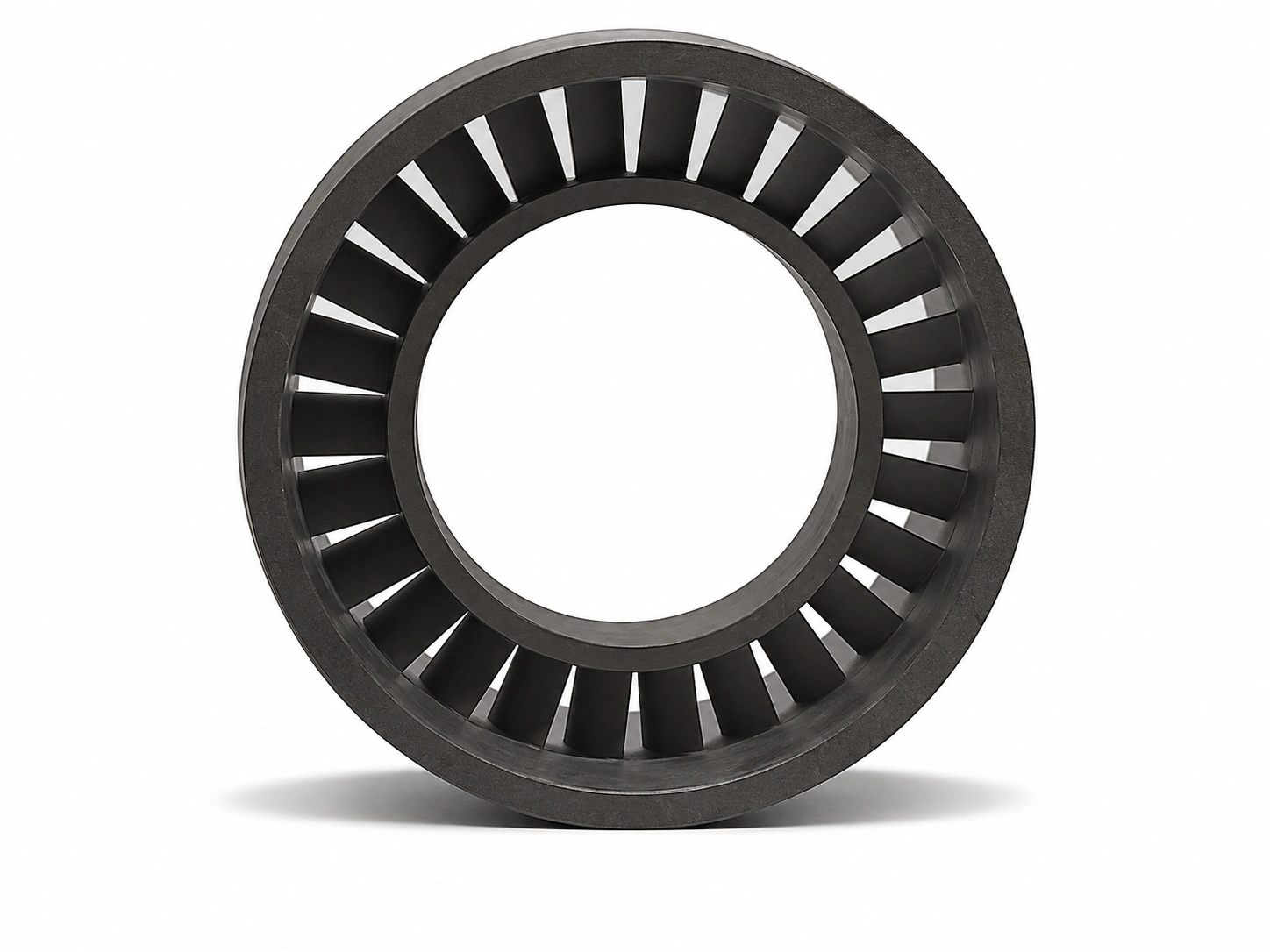
Procurement teams searching for an Inconel casting provider require transparency and reliability. ForceBeyond provides the technical engineering support of a domestic partner combined with the massive scale of a global manufacturer.
ForceBeyond provides full material traceability and rigorous adherence to international standards for all nickel-based superalloys. Below are the primary Inconel grades manufactured at our co-owned facilities:
| Alloy Grade & Spec | Tensile Strength (UTS) | Yield Strength (0.2%) | Max Service Temp | Applicable Standard / Verification |
|---|---|---|---|---|
| Inconel 718 (AMS 5383) | 125 – 145 ksi (862 – 1000 MPa) | 105 – 125 ksi (724 – 862 MPa) | 1300°F (704°C) | ASTM E8, ASTM E21 elevated temp, ASTM E1417 (FPI) |
| Inconel 625 (AMS 5401) | 100 – 120 ksi (689 – 827 MPa) | 50 – 70 ksi (345 – 483 MPa) | 1800°F (982°C) | ASTM E8, ASTM E1742 (RT), ASTM B443 |
| Inconel 713C (AMS 5383) | 110 – 135 ksi (758 – 931 MPa) | 85 – 105 ksi (586 – 724 MPa) | 1750°F (954°C) | ASTM E139 creep-rupture, ISO 9001:2015 |
| Inconel X-750 (AMS 5390) | 120 – 140 ksi (827 – 965 MPa) | 80 – 100 ksi (552 – 689 MPa) | 1500°F (816°C) | ASTM E8, AS9100D, ISO 9001:2015 traceability |
| Casting Feature / Parameter | Standard Tolerance | Precision Tolerance | Quality Inspection Standard |
|---|---|---|---|
| Linear Dimensions (≤ 2 in / 50 mm) | ±0.010 in (±0.25 mm) | ±0.004 in (±0.10 mm) | ISO 8062-3 DCTG 4, Multi-axis CMM |
| Wall Thickness (≥ 0.040 in / 1.0 mm) | ±0.008 in (±0.20 mm) | ±0.004 in (±0.10 mm) | Ultrasonic wall gauge, CT scanning |
| Surface Finish (As-Cast) | 125 Ra (3.2 µm) | 63 – 90 Ra (1.6 – 2.3 µm) | Profilometer surface verification |
| Internal Soundness & Defects | ASTM E192 reference | Zero critical gas porosity | ASTM E1742 (RT X-ray), ASTM E1417 (FPI) |
Our co-owned foundries follow a precision-engineered “Lost Wax” process specifically optimized for nickel-based superalloys to ensure “near-net-shape” accuracy:
ForceBeyond’s manufacturing network supports demanding sectors with Inconel components produced and documented to the applicable program requirements:
Technical White Paper
Review ForceBeyond’s technical guide to Inconel 718, Inconel 625, VIM, HIP, near-net-shape manufacturing, NDT, alloy selection, and casting-vs-forging screening.
ForceBeyond co-owns and operates specialized investment casting facilities in the United States, South Korea, and Taiwan, providing a redundant and flexible global supply chain.
Co-ownership ensures that ForceBeyond has priority production capacity and direct control over the manufacturing floor, avoiding the markups and communication gaps associated with traditional sourcing brokers.
Yes. Every shipment includes full material certification (MTRs), chemical analysis, and NDT (Non-Destructive Testing) reports to ensure compliance with ASTM, AMS, and customer-specific standards.
Common grades include Inconel 718, 625, 713C, X-750, and other nickel-based superalloys, subject to component geometry, specification, mechanical-property requirements, and production volume.
Vacuum melting helps limit oxidation, gas pickup, and contamination when processing nickel-based superalloys containing reactive alloying elements.
No. HIP is applied when required by the drawing, customer specification, qualification plan, or service conditions. It may be used to reduce internal porosity in critical components.
Available inspection methods may include radiographic testing, fluorescent penetrant inspection, dimensional inspection, chemical analysis, mechanical testing, and positive material identification.
Yes. ForceBeyond can coordinate casting, heat treatment, HIP where required, 5-axis CNC machining, surface finishing, inspection, and final documentation.
Expand this section to review the external standards, technical organizations, and reference materials used for this page.
Explore related ForceBeyond material, process, quality, industry, and manufacturing resources.