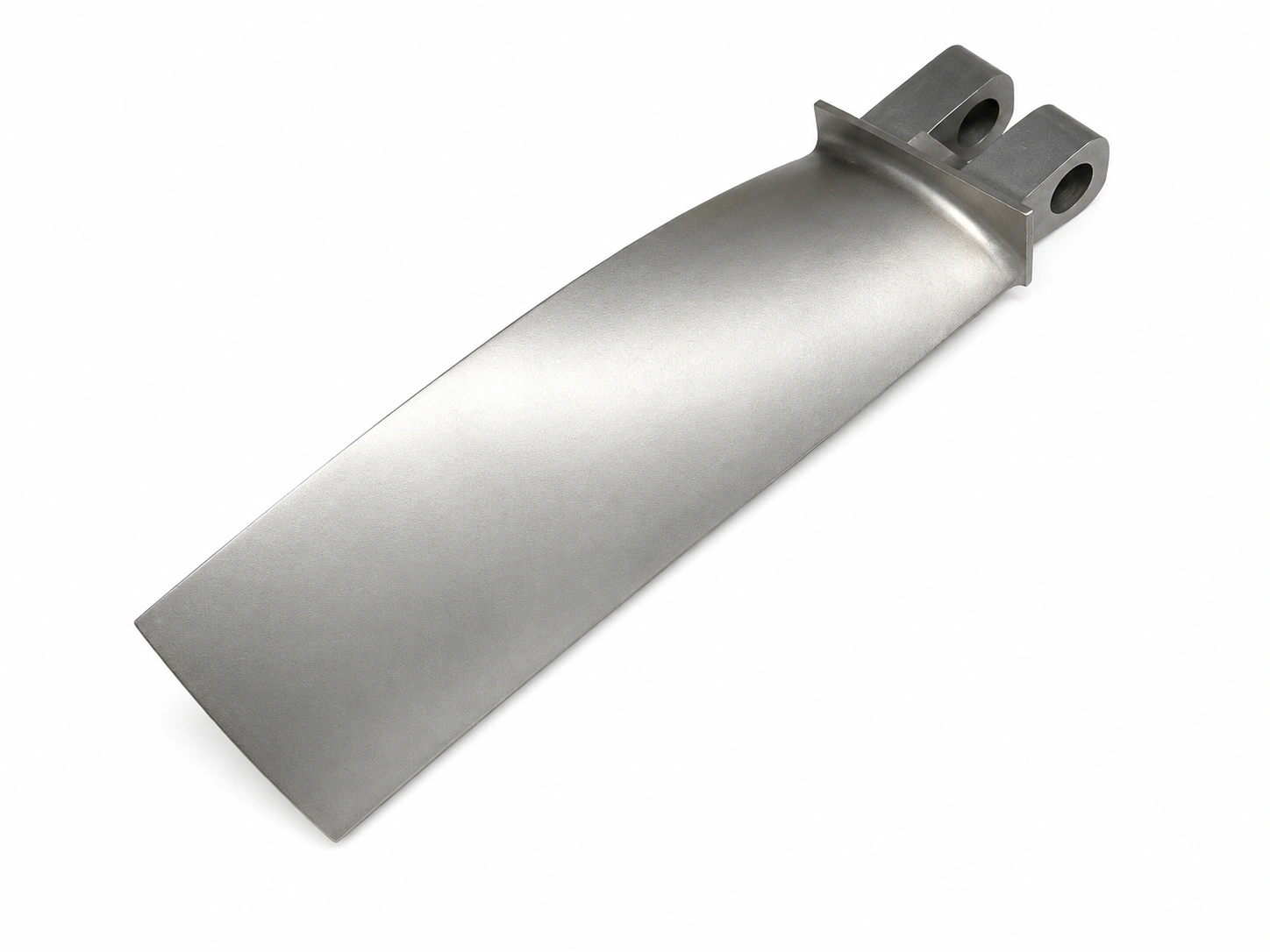
Engineering Excellence: The VIM + HIP Protocol
Titanium Aerospace Casting Mechanical Properties & HIP Requirements | Titanium Cast Alloy & Condition | Tensile Strength (UTS) | Yield Strength (0.2%) | Elongation / Max Temp | Applicable Standard / Verification |
| Ti-6Al-4V Cast + HIP (AMS 4991 / C-5) | 130 – 145 ksi (896 – 1000 MPa) | 120 – 135 ksi (827 – 931 MPa) | 8 – 12% / 600°F (316°C) | ASTM E8, AMS 4991, ASTM E1417 (FPI) |
| Ti-6Al-4V ELI Cast + HIP (Grade 23) | 125 – 138 ksi (862 – 952 MPa) | 115 – 128 ksi (793 – 883 MPa) | 10 – 15% / 600°F (316°C) | ASTM E8 / ASTM E21 elevated temp, AMS 4985 |
| CP Titanium Grade 2 (ASTM B367 C-2) | 50 – 70 ksi (345 – 483 MPa) | 40 – 55 ksi (276 – 379 MPa) | 15 – 25% / 400°F (204°C) | ASTM B367, ASTM E8, ISO 9001:2015 |
| Ti-5Al-2.5Sn Cast + HIP (AMS 4984) | 120 – 135 ksi (827 – 931 MPa) | 110 – 125 ksi (758 – 862 MPa) | 10 – 14% / 800°F (427°C) | AMS 4984, ASTM E1742 (RT X-ray), AS9100D |
ForceBeyond applies project-specific metallurgical controls to support the internal soundness and mechanical-property objectives required by the applicable aerospace specification and qualification plan.
Vacuum Induction Melting (VIM)
Titanium’s extreme affinity for oxygen requires a total vacuum environment during the melt. Our VIM process ensures
controls oxygen-related contamination and helps limit alpha-case formation during melting and solidification.
Hot Isostatic Pressing (HIP)
HIP may be required for certain flight-critical castings when specified by the drawing, material specification, customer requirements, or qualification plan. The process subjects castings to simultaneous high temperature and inert gas pressure.
This collapses internal micro-shrinkage and gas porosity, transforming the as-cast structure into a fully
dense material with mechanical properties approaching wrought levels.